Grab up to 60% off in Our Big Bathroom Sale!
+ Extra 10% off our Radiator Range With Code RAD10. Ends:
Assisted Living Bathroom Buying Guide
How to Create a Safer, Easier-to-Use Bathroom
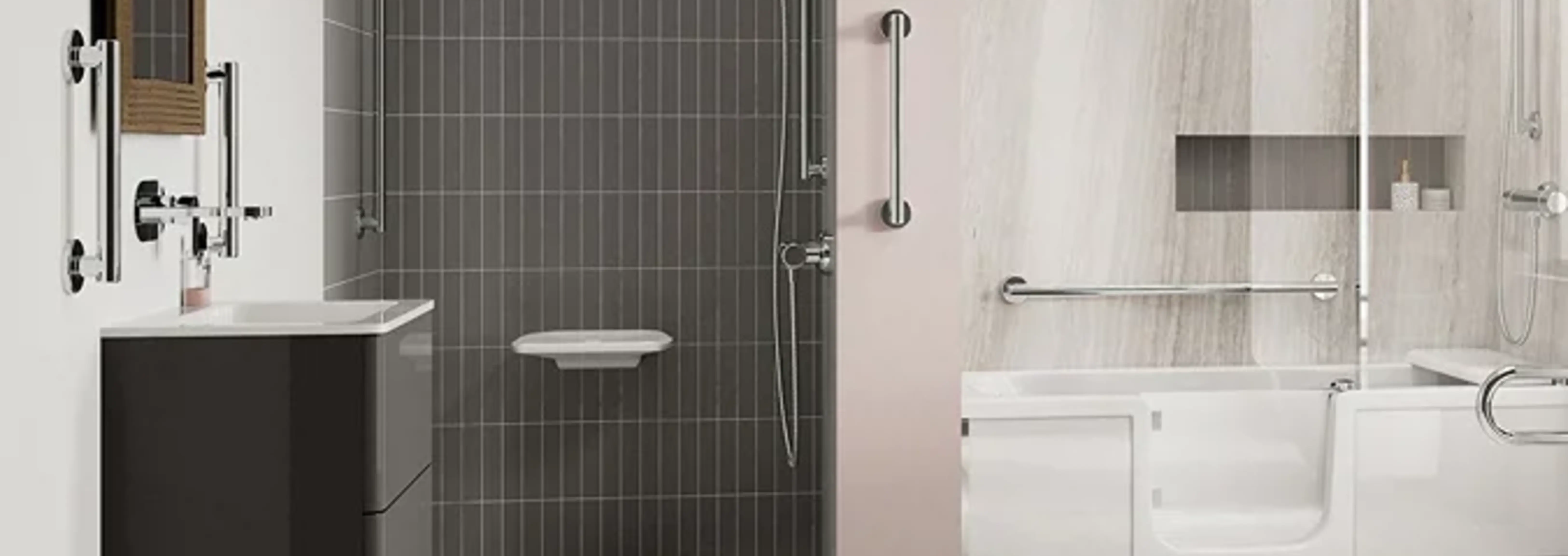
Creating an assisted living bathroom is all about making everyday routines feel safer, simpler and more comfortable. Whether you’re planning for yourself, a family member or future needs, the right layout and fixtures can make a big difference.
This guide covers the key things to think about before you buy. We’ll help you plan your space, compare accessible bathroom options and choose practical products that support independence at home.
Table of contents
- What is an assisted living bathroom?
- Before you buy
- Assessing your space and layout
- Considering user needs
- Choosing between a walk-in bath, easy access shower or wet room
- Safety and hygiene tips
- Types of accessible bathroom fixtures
- Assisted living bathroom accessories
- Costs, funding and compliance
- FAQs
What is an assisted living bathroom?
An assisted living bathroom is designed to make washing, bathing and toileting safer and easier. It can also be called an accessible, adapted or mobility-friendly bathroom.
These spaces often include features such as walk-in baths, accessible showers, shower seats and grab rails. The aim is to reduce slips and trips, make daily routines more comfortable and help you or your loved one feel more independent at home.
Before you buy
Before choosing products, think about who will use the bathroom, how they move around and whether their needs may change over time. A space that works today should also feel safe, practical and easy to adapt later.
Start with the basics: doorway width, floor space, existing plumbing and whether a carer may need room to help. It’s also worth thinking about seated bathing, step-free showering, raised toilet height and extra support around the basin.
For more complex needs, speak to an occupational therapist or experienced installer before you buy. They can help with layout, grab rail positions, transfer space and future-proofing, so the finished bathroom feels right from the start.
Assessing your space and layout
Before choosing fixtures, take a good look at the room you’re working with. Accurate measurements and a clear plan can help you avoid tight gaps, awkward access and costly plumbing changes later. Start with these checks:
- Measure your bathroom: Note width, depth and height, particularly around the doorway. If you’re replacing an existing bath or shower, positioning new fixtures in the same area can streamline plumbing.
- Door clearance and access: Outward-opening or sliding doors can make the room easier to enter and help prevent the door being blocked in an emergency. For wheelchair or walking aid access, aim for a clear opening of around 813mm or more where possible.
- Floor space: Leave enough room for manoeuvring, especially if wheelchairs or carers need easy access. A level-access shower or walk-in bath can also help make the space easier to move around.
- Emergency access: Choose easy-release locks and avoid layouts where the door could be blocked if someone falls. This helps carers, family members or emergency services get into the room quickly if help is needed.
- Storage and clear pathways: Keep everyday items within easy reach and reduce clutter on the floor. Wall-mounted cabinets, recessed shelves and easy-access storage can help prevent bending, stretching and trip hazards.
Considering user needs
Think about who the bathroom is for and what would make their daily routine safer, easier and more comfortable:
- Mobility and support: Think about whether the person can stand, turn, sit or transfer safely without help. If you’re choosing shower seats, bath lifts, hoists or support accessories, always check the Safe Working Load (SWL).
- Carer access: If someone helps with washing, toileting or transfers, allow enough space for them to move safely too. This is especially important around showers, toilets, baths and basins.
- Comfort, safety and visibility: Thermostatic mixing valves (TMVs) help reduce the risk of scalding, while contrasting fixtures can make key features easier to spot. Clear labelling and colour contrast can also help in dementia-friendly bathrooms.
- Future-proofing: If mobility may change over time, leave space for future additions such as extra grab rails, a shower seat, a raised toilet seat, wider access or a ceiling hoist. Choosing adaptable products now can help avoid bigger changes later.
Choosing between a walk-in bath, easy access shower or wet room
The right option depends on how the bathroom will be used every day. Some people prefer the comfort of a bath, while others need quicker, step-free access for washing, wheelchair use or carer support.
- Walk-in baths are a good choice if you still enjoy bathing but find it difficult to step over the side of a standard bath. Look for low thresholds, built-in seating, easy controls and secure locking doors.
- Easy-access showers work well if you can walk or transfer with some support. Low-profile trays, wider openings, grab rails and fold-down seats can make showering feel safer and more comfortable.
- Wet rooms and level-access showers are often best for wheelchair users, walking aids or carer-assisted washing. They remove the need to step into a tray, but they do need careful waterproofing, drainage and flooring.
If you’re unsure which option is safest, ask an occupational therapist or experienced installer to assess the space before you buy.
Safety and hygiene tips
Focus on simple safety features that make the bathroom easier to use and maintain:
- Grab rails: Grab rails give extra support around toilets, showers, baths and basins. They should always be fixed securely to a suitable wall, so check the installation requirements before fitting.
- Anti-slip flooring: Slip-resistant vinyl, rubber flooring or non-slip tiles can help reduce the risk of falls. Keeping the floor clear of clutter also makes the room easier and safer to move around.
- Drainage and waterproofing: Wet rooms and level-access showers need the right drainage, floor gradient and waterproofing to work properly. Poor drainage can lead to pooling water, slippery floors and leaks.
- Hygienic surfaces: Smooth, wipe-clean surfaces such as wall panels, vinyl flooring and easy-clean sanitaryware can make the bathroom simpler to maintain.
- Water temperature safety: Thermostatic mixing valves help keep water temperature steady and reduce the risk of scalding. Sensor taps and lever taps can also be easier to use if you have limited grip or hand strength.
- Easy-clean surfaces: Wall panels, rimless toilets, smooth basins and simple shower screens can all make cleaning easier. Fewer grout lines and awkward corners mean less scrubbing too.
Types of accessible bathroom fixtures
The right fixtures can make everyday routines feel safer and more manageable. Here are the main accessible bathroom options and how they can help.


Assisted living bathroom accessories
The right accessories can make an assisted living bathroom safer and easier to use every day. From grab rails and shower seats to alarm systems and easy-reach storage, small additions can make a big difference.
- Grab rails: Grab rails provide a steady point of support near toilets, showers, baths and basins. Choose a suitable size and finish, and make sure they’re fitted securely to the right type of wall.
- Shower seats: Shower seats let you shower while seated, helping reduce fatigue and the risk of slipping. Choose from wall-mounted, fold-down or freestanding styles depending on your space.
- Arm rests: Add support when sitting down or standing up, especially around toilets and basins. They can help reduce strain on the arms, hips and knees.
- Raised toilet seats: Increase the height of a standard toilet, making it easier to sit and stand. Many options are removable, so they can be a simple upgrade without replacing the whole toilet.
- Alarm systems: Help someone call for assistance quickly if they slip, fall or feel unwell. Pull cords, panic buttons or wireless sensors can add extra reassurance for users, carers and family members.
- Contrasting accessories: Grab rails, toilet seats and shower seats in contrasting colours can make key features easier to see. This can be especially helpful for people with visual impairments, memory issues or dementia.
- Easy-reach storage: Keep toiletries and towels close by to reduce bending, stretching and unnecessary movement on wet floors. Wall cabinets, shelves and shower baskets can all help.
Costs, funding and compliance
Before starting your accessible bathroom project, it’s worth checking the costs, funding options and any safety standards that may apply. This can help you plan your budget properly, avoid delays and make sure your bathroom is fitted safely.
- Home survey: For larger adaptations, arrange a home survey before buying. This can help check measurements, drainage, plumbing routes, electrical requirements and whether the room can support the fixtures you want.
- Installation costs: Use reputable installers with experience in accessible bathroom adaptations. Wet rooms may need tanking, slip-resistant flooring and careful drainage, while any electrical work, such as powered seats or spa jets, should be handled by a qualified electrician.
- Key measurements: Check product dimensions carefully, including toilet height, basin height, shower tray threshold, shower seat height, grab rail size and door opening width. Small measurement differences can have a big impact on comfort and access.
- Financial support: Disabled Facilities Grants may help cover necessary adaptations, often after an occupational therapist assessment. VAT relief may also apply if you have a recognised disability, and some charities or community schemes may offer partial funding or low-interest loans.
- Flexible finance: You may also be able to spread the cost of your accessible bathroom with flexible finance. Look out for the "finance available" tag on our product listings.
- Approvals and certifications: Look for products with recognised approvals such as TMV2, TMV3 and WRAS. These can help show that products meet safety, water regulation or thermostatic control standards.
- Building regulations: Make sure your project follows any relevant UK building regulations. Part M provides guidance around access and use of buildings, and may be especially important for commercial, rental or publicly accessible spaces.
FAQs
Planning an assisted living bathroom can bring up a few practical questions. Here are the key things to know before you choose your layout, fixtures or accessories.
Not always, but it can be very helpful for complex needs. An occupational therapist can recommend safer layouts, fixture heights, grab rail positions and bathing options based on the person using the bathroom.
It depends on the user’s mobility and routine. Walk-in baths are good for people who prefer bathing but struggle with a standard bath edge. Wet rooms are often better for wheelchair users, walking aids or carer-assisted washing.
Yes, but careful planning is important. Space-saving products such as wall-hung basins, sliding doors, corner toilets, fold-down shower seats and level-access showers can make a smaller room easier to use.
Grab rails should be placed where the user naturally needs support, such as beside the toilet, near the basin, inside the shower or by the bath. The best height and position depends on the user, so it’s worth getting professional advice.
Grab rails, lever taps, anti-slip flooring, shower seats and better lighting are all useful places to start. The right choice depends on the bathroom layout and the level of support needed.
Costs vary depending on the products, layout and level of installation work needed. Simple changes like grab rails or lever taps usually cost less, while wet rooms, walk-in baths and major layout changes need a bigger budget.
Final thoughts
An assisted living bathroom should make everyday routines feel safer, easier and more comfortable. By planning the layout, checking your measurements and choosing the right fixtures, you can create a space that supports independence at home.
Think about who will use the room, how their needs may change and which products will make the biggest difference day to day. For more complex mobility or care needs, speak to an occupational therapist or experienced installer before you buy.