Grab up to 60% off in Our Summer Sale!
Plus an Extra 10% off Showers With Code SHOWERS10. Code Ends:
Bath Buying Guide
How to Choose a Bath for Your Bathroom
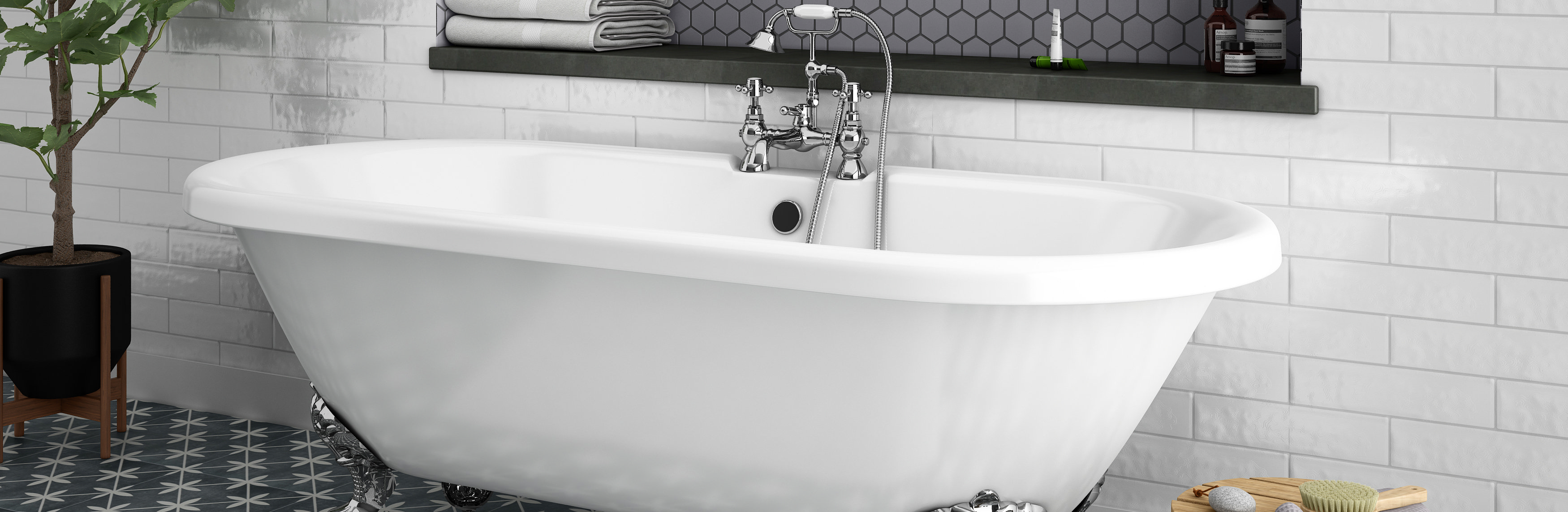
Buying a bath is about more than choosing something that fits the room. The right bath can make your bathroom more comfortable, practical and relaxing to use every day.
This bath buying guide walks you through the basics, from different bath types and materials to sizing, costs and key features. Whether you’re replacing an old bath, planning a full renovation or looking for something more comfortable, we’ll help you find the right fit.
Table of contents
- Bath sizes
- Types of baths
- Bath materials
- Bath colours
- Bath fittings and accessories
- Key considerations before you buy
- FAQs
Bath sizes
Before choosing a bath, measure your bathroom and the route leading to it. Doorways, stairs, landings and tight turns can all affect whether your chosen bath can be delivered and fitted easily. It’s also worth checking the packaged size, not just the bath dimensions.
- Compact baths: Smaller baths, usually around 1200mm to 1500mm long, can work well in tight bathrooms, en-suites or awkward layouts. Shower baths or corner baths can also help make better use of limited space.
- Standard baths: A common standard bath size in the UK is around 1700mm by 700mm. This makes straight baths a practical option for many family bathrooms and like-for-like replacements.
- Large baths: Baths around 1800mm or longer give you more room to stretch out, but they need more floor space and may use more water. Freestanding and double ended baths are popular choices for larger bathrooms.
Two baths with the same external size can feel different inside. Check the internal length, width and depth as well as the outside dimensions, especially if comfort is a priority.
When it comes to bath thickness, most acrylic baths are around 5mm to 10mm thick. As a general guide, an 8mm acrylic bath can offer better strength, stability and heat retention than thinner options. Double-skinned acrylic baths can also feel sturdier and help reduce flex during day-to-day use.
Types of baths
The best bath type for you will depend on your room size, layout, plumbing and how you like to use the space. Some baths are better for showering, some give you more room to relax, and others are designed to make getting in and out easier.


There are also a few more bath styles worth knowing about, especially if you’re working with a specific layout, comfort need or design preference.
- Straight baths: Straight baths are the most common bath style and usually sit against a wall or in an alcove. They’re a practical choice for family bathrooms, work well with bath screens and shower mixers, and are often one of the easiest options to fit into standard layouts. They usually need bath panels to hide the frame and pipework for a neater finish.
- Walk-in baths: Walk-in baths have a door, and may include features like grab rails, seats and anti-slip surfaces. They can make getting in and out of the bath safer and easier, especially if mobility is a concern.
- Double ended baths: Double ended baths have the taps and waste positioned in the centre, so either end can be used for bathing. They’re a good option if comfort is a priority or more than one person uses the bathroom.
- Single ended baths: Single ended baths have the taps and waste positioned at one end, leaving the other end free for lying back. They’re a practical, familiar choice for everyday bathrooms.
- Slipper baths: Slipper baths are freestanding baths with a higher backrest, giving you more support when you want to sit back and soak.
- Bateau baths: Bateau baths are freestanding baths with curved sides and a traditional boat-inspired shape. They’re a good choice if you want the bath to feel more decorative.
- Back-to-wall baths: Back-to-wall baths sit flush against a wall, giving you the look of a freestanding bath while helping save floor space.
- Anti-slip baths: Anti-slip baths have textured surfaces designed to give you more grip underfoot and help reduce the risk of slips.
- Hidden waste baths: These baths have a more discreet waste system, helping the bath look cleaner and less cluttered.
Bath materials
Your bath material affects how sturdy the bath feels, how well it holds heat and how easy it is to look after. Here are the main options to compare before you choose:
- Acrylic: Acrylic is affordable, lightweight and versatile, with acrylic baths available in a wide range of designs. They are best for budget-friendly modern bathrooms with versatile décor styles.
- Enamelled steel: Lighter than cast iron, steel enamel baths are sturdy and scratch-resistant with excellent heat retention. However, they are prone to chipping or rusting if not well maintained.
- Cast iron: Best for period or classic bathrooms, cast iron baths offer unmatched luxury, traditional appeal and exceptional heat retention. However, they are heavy and may require floor reinforcement.
- Stone resin: This material is durable, retains heat well and has a modern look, making stone resin baths ideal for luxury bathrooms. You are generally limited in style options, though.
Bath colours
White is still the most common choice, but coloured baths can work well if you want the bath to stand out or tie in with your wider bathroom scheme.
- Soft colours: Calming shades like pastel blue or sage green for a soothing effect.
- Bold tones: Antique gold, deep red, or matte black for drama and sophistication.
- Speciality finishes: Chrome, brushed brass, or primed cast iron elevate luxury.
You can match your bath colour with your wider bathroom scheme for a coordinated look, or choose a contrasting colour if you want the bath to stand out.
Bath fittings and accessories
Your bath may not come with every fitting or accessory you need, so it’s worth checking what’s included before you buy. Taps, wastes, panels and accessories can all affect how your bath is fitted, how it works and how easy it is to use day to day.
- Bath taps: Check whether your bath is suitable for deck mounted, wall mounted or freestanding bath taps. Some baths come with tap holes, while others may need drilling or require taps to be fitted separately. Freestanding baths often need freestanding or wall mounted bath spouts, while straight baths commonly work with deck mounted bath taps or bath shower mixers.
- Bath wastes and overflows: Every bath needs a bath waste and overflow so water can drain away safely. Options include plug and chain, pop-up, click clack and exposed waste designs. Freestanding baths may need a more decorative exposed waste, while some modern baths may work with combined bath filler, waste and overflow systems.
- Bath panels: Bath panels are designed to customise and enhance the appearance of your bath's exterior. They are best for alcove and inset baths that require a stylish finish to conceal plumbing.
- Bath shower screens: Curved, square, or sail-shaped bath screens prevent splashes while elevating the look of your bath-shower combo.
- Bath feet: Roll top and traditional freestanding baths may need decorative feet. Check whether these are included or sold separately.
Key considerations before you buy
Before choosing a bath, think about how it will feel to use, how it will fit and what your bathroom can support. A few checks around comfort, plumbing, access and installation can help you avoid costly surprises later.
- Comfort: Check the slope, depth, length and internal width of the bath to make sure it suits how you like to bathe. A deeper bath may feel more relaxing, while a lower bath can be easier to step in and out of.
- Water capacity: Larger, deeper and double ended baths may need more water to fill comfortably. Before choosing a large bath, check that your hot water system can supply enough hot water, especially if you have a smaller cylinder or a busy family bathroom.
- Heat retention: Bath material, thickness and insulation can all affect how long the water stays warm. Acrylic, cast iron and stone resin baths can retain heat well, while double-skinned acrylic can offer extra warmth and strength.
- Plumbing: Check that your existing water supply and waste pipework suit your chosen bath. Moving a bath to a new position, choosing a central waste or fitting freestanding taps can increase installation work and cost.
- Left or right-handed layout: Shower baths and some corner baths come in left- or right-handed designs. This usually refers to the position of the wider showering end, curved section or open side when viewed from the front. Check your room layout, waste position and shower screen placement before choosing.
- Accessibility: Walk-in baths, grab rails, anti-slip surfaces and lower bath heights can make bathing safer and easier. These features are worth considering if the bathroom will be used by children, older relatives or anyone with reduced mobility.
- Installation access: Measure doorways, stairs, landings and tight turns before ordering, especially for large freestanding, stone resin or cast iron baths. Check the packaged size as well as the bath size.
- Bath weight: Heavy baths, such as cast iron or stone resin designs, may need floor reinforcement. Always check the product weight and installation guidance before buying.
FAQs
Still got questions? Here are quick answers to a few common things people ask before buying a bath.
To buy the right bath, focus on size, comfort, material, plumbing and installation requirements. Measure your bathroom and access route, check the bath thickness and weight, confirm tap and waste compatibility, and make sure any panels, legs, feet or fixings are included. If the bath will be used with a shower, check that a compatible bath screen is available.
A common standard bath size in the UK is around 1700mm by 700mm, especially for straight baths. Smaller compact baths and larger freestanding or double ended baths are also available, so always measure your space before buying.
The cost of an average bath depends on the type and material:
- Budget-friendly: £150 to £1,000 (acrylic and fibreglass models).
- Mid-range: £1,000 to £2,000 (double-ended or cast iron baths).
- Luxury: £2,000+ (freestanding stone or whirlpool designs).
Look for seasonal sales or bundles that include accessories like panels or taps to save even more.
Bath fitting costs vary depending on the type of bath, access, plumbing changes and whether the old bath needs removing. A simple like-for-like bath replacement may cost a few hundred pounds in labour, while more complex installations, such as freestanding, whirlpool, cast iron or relocated baths, can cost significantly more. Always get a few quotes from qualified bathroom fitters or plumbers before starting the work.
Keeping at least one bath can be appealing to many buyers, especially families with young children. A well-chosen bath can also make a bathroom feel more practical and desirable. However, the value it adds depends on the property, buyer expectations and the overall quality of the bathroom.
Final thoughts
Choosing the right bath comes down to your space, budget and how you use your bathroom day to day. Once you know the size, style, material, tap setup and installation requirements, it becomes much easier to narrow down your options. Explore our full range of baths today and bring your bathroom vision to life.